
Guide
Short answer
Prepare a project brief, site photos, lot details, target floor area, existing plans if available, finish preferences, timeline, and budget direction before requesting an estimate.
Definition
Estimate preparation means collecting enough project information for a contractor to understand what is being priced and what still needs review.
Key takeaways
- A complete inquiry helps contractors respond faster and with fewer assumptions.
- Photos and site access details are useful even before formal drawings are ready.
- Finish preferences should be discussed early because they affect pricing.
- Permit and professional requirements may depend on scope, so confirm with the right office or professional.
What basic information should you send?
Short answer: Send the location, project type, target size, current condition, timeline, and the main result you want.
A contractor needs context before giving a meaningful number. A short message saying you want to build or renovate is a start, but it leaves too many assumptions open.
A better inquiry explains whether the project is new construction, renovation, design-build planning, fit-out, or documentation support. It also includes the site location and any known restrictions.
- Project location and nearby landmark
- New build, renovation, fit-out, or documentation support
- Target floor area or room list
- Current site or home condition
- Preferred timeline and urgency
- Budget direction, if available
What photos help with an estimate?
Short answer: Clear daylight photos help the contractor understand access, existing condition, and potential constraints.
Photos do not replace a site visit, but they help the first conversation. For Cagayan de Oro homeowners, include road access, frontage, lot corners, drainage areas, existing structures, and nearby walls or obstructions.
For renovation, show the rooms, ceilings, floors, walls, electrical areas, plumbing areas, and any visible damage.
- Street view and access road
- Frontage, sides, and rear of the lot
- Existing structures or rooms to be renovated
- Drainage, slope, or water-prone areas
- Problem areas such as cracks, leaks, or damaged finishes
Do you need drawings before asking?
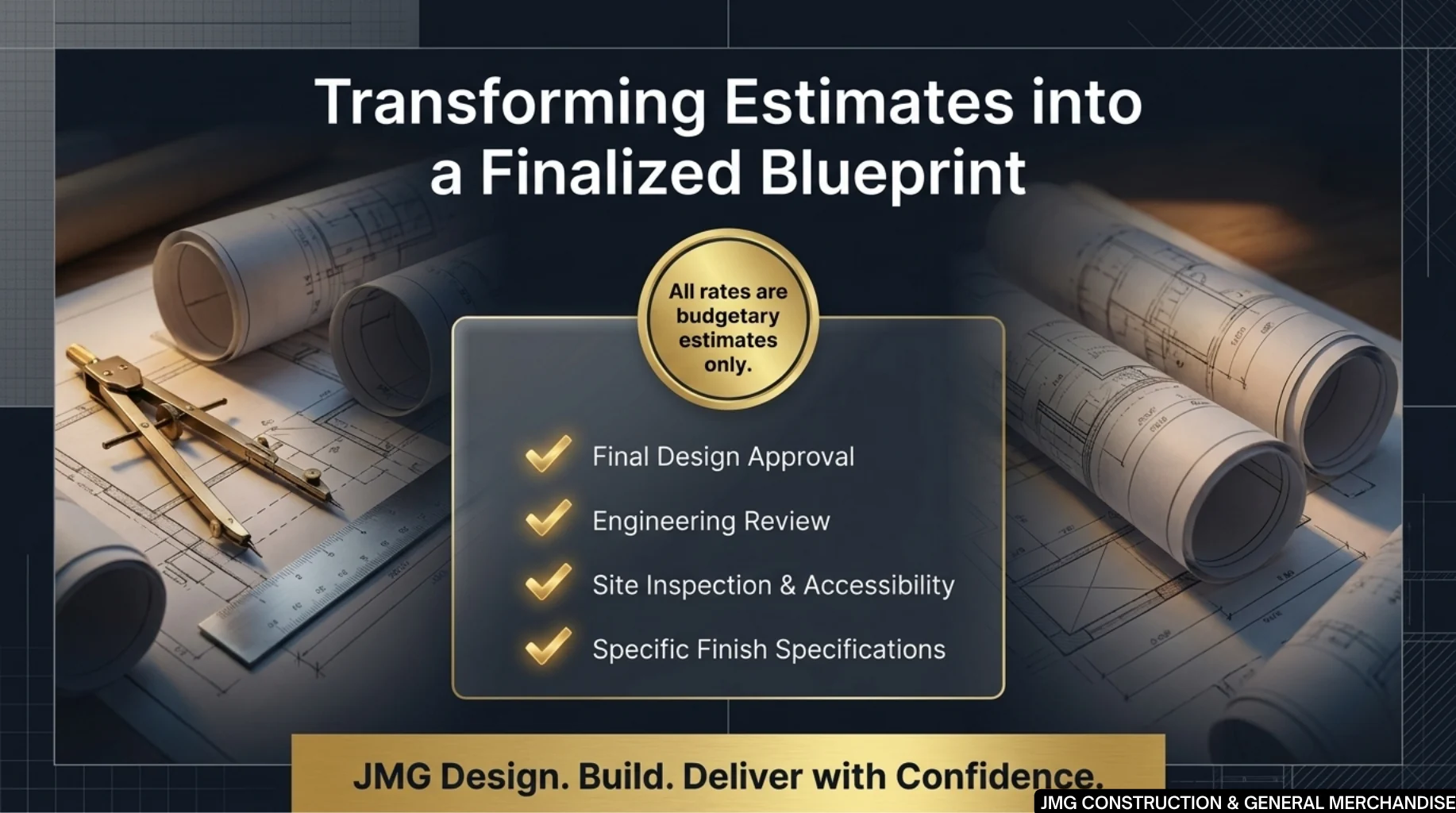
Short answer: Not always, but drawings make the estimate more specific and reduce guesswork.
If drawings are not ready, a contractor may provide early budget guidance based on floor area and scope assumptions. For a detailed proposal, plans, dimensions, finish schedules, and site details are more useful.
If structural or permit-sensitive work is involved, consult a qualified professional and confirm requirements with the proper office.
- Sketches or concept plans
- Architectural drawings if available
- Structural, electrical, plumbing, or sanitary drawings if available
- Finish pegs and material references
- Previous plans for existing homes
How should you share budget direction?
Short answer: Share a realistic range or ceiling if you have one, and ask what scope can fit that range.
Some homeowners avoid sharing a budget because they worry it will affect pricing. In practice, budget direction helps the contractor recommend a feasible finish level and scope.
A clear budget conversation can prevent design choices that are far above the available amount.
- State whether the budget is flexible or fixed
- Separate construction budget from furniture and appliances if needed
- Ask what is included, excluded, or optional
- Leave room for contingencies where scope is uncertain
Estimate request checklist
- Prepare a one-page project brief.
- Attach site or existing-home photos.
- List target rooms, floor area, and number of storeys.
- Share drawings, sketches, or reference images.
- Describe preferred finish level and must-have materials.
- State timeline and budget direction.
- Ask the contractor to identify assumptions and missing information.
Service-relevant next steps
- Use project consultation if you only have an idea and need direction.
- Use design-build planning if you need scope and budget alignment.
- Use blueprint and documentation support if drawings or specifications are incomplete.
Related JMG services
FAQ
Can a contractor estimate from photos only?
Photos can support early budget guidance, but they are not enough for a final estimate. A site visit, measurements, drawings, and finish assumptions make pricing more reliable.
Should I mention my budget?
Yes, if you have a range or ceiling. It helps the contractor recommend a feasible scope and finish level instead of pricing a project that does not match your priorities.
What if I do not know the floor area yet?
Start with a room list and approximate size target. Design-build planning or consultation can help translate the need into a more realistic area and scope.